UFC 300: one artist, two scales of attention.
Gian Galang’s mural and poster have different proportions, materials and lives. A comparison of wall, paper and screen.
The same event can produce an image intended for a wall and an image intended for a page. They may share a subject, but their proportions give the viewer different instructions. One stretches across a field of vision; the other can be held, framed or read as a compact surface.
Two works, precisely recorded
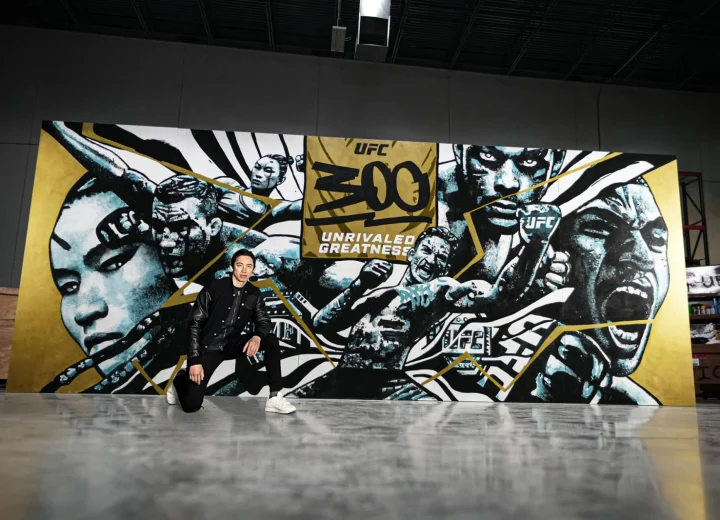
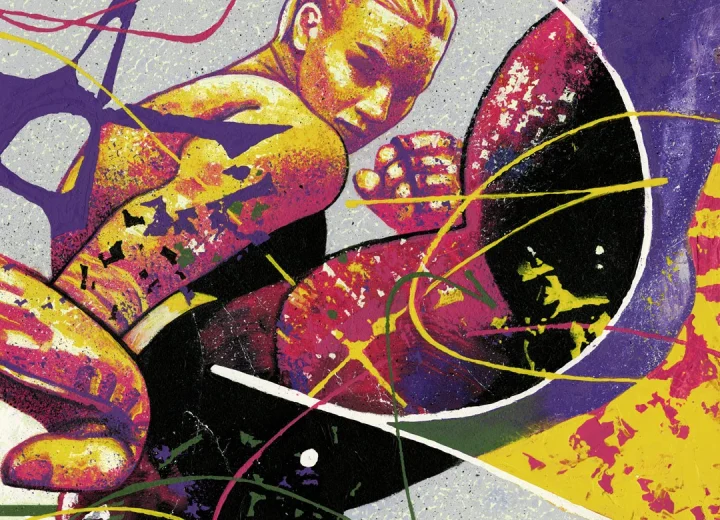
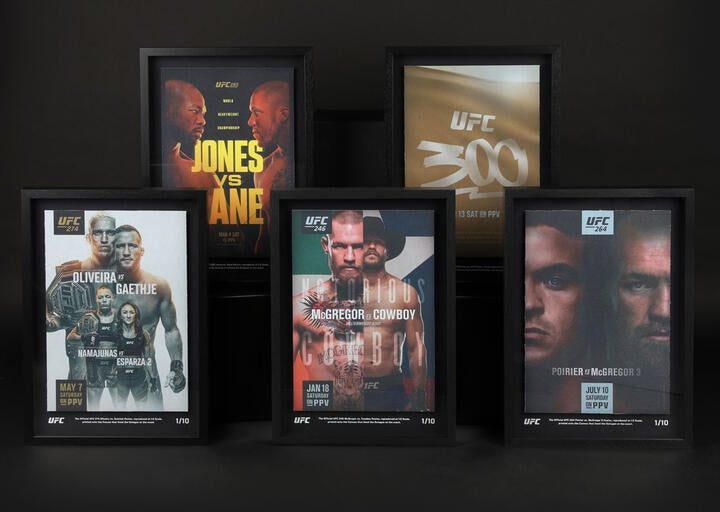
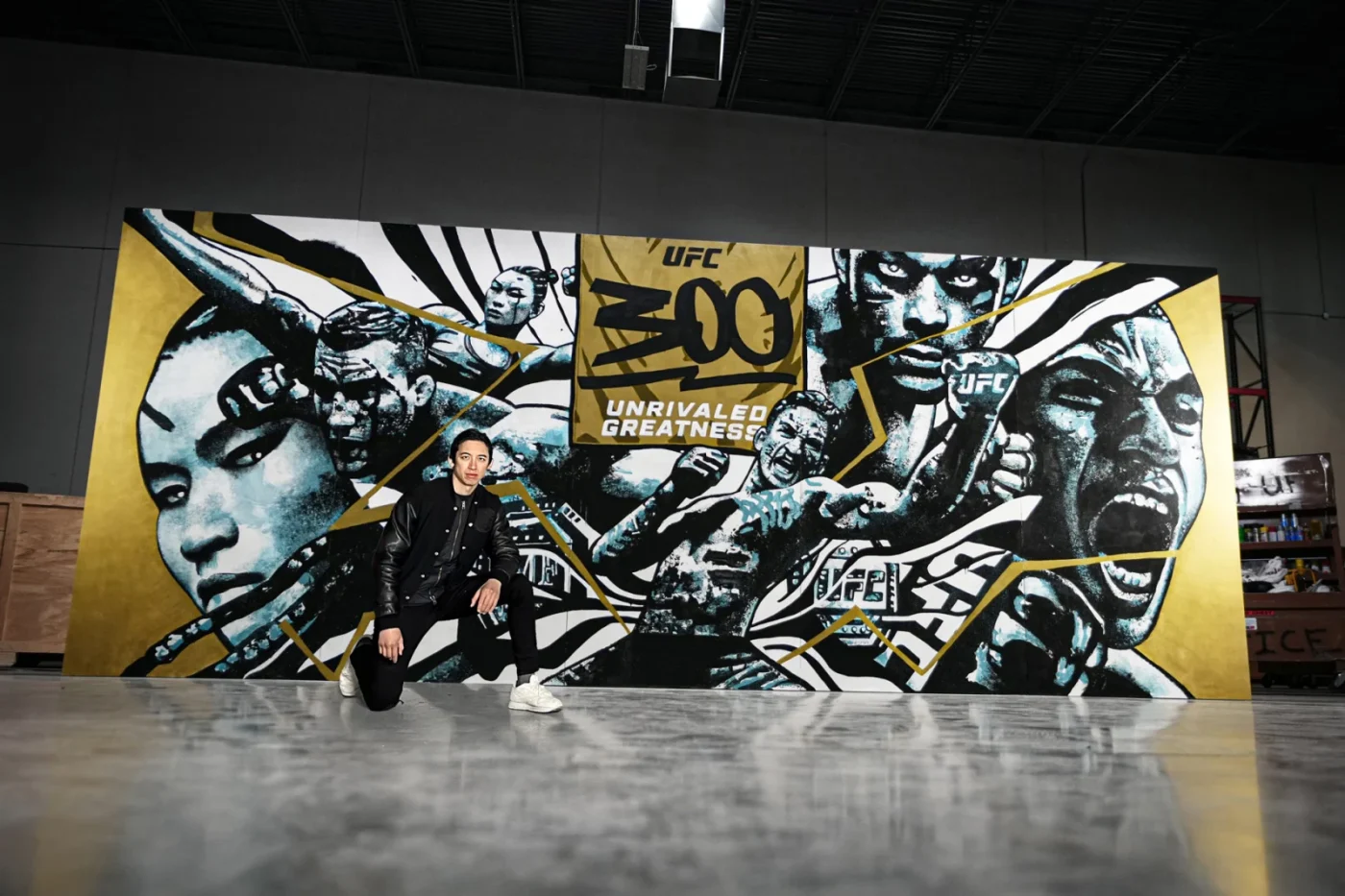
Galang’s UFC 300 portfolio lists a 2024 mural measuring 8 × 20 feet, made with acrylic and spray paint, and an Artist Series poster measuring 37 × 26 inches, painted in acrylic on watercolour paper. His record links the mural to UFC headquarters in Las Vegas and says it was used in the Countdown opening and Weigh-in Show. It identifies the UFC Apex Center as its installed location. We attribute that location to the artist’s record rather than claiming a recent site visit.
Proportion before spectacle
The listed dimensions establish two different formats: a horizontal mural with a 2.5:1 ratio and a vertical poster with a 26:37 ratio. The portfolio photograph also places Galang beside the mural, giving its large surface a human reference. Those proportions affect how bodies can spread across an image and how a viewer moves through it.
A wide rectangle encourages a scan across the image. A vertical rectangle can stack information and hold a central figure differently. That is a formal possibility, not a statement of Galang’s intentions. Follow the portfolio images to examine how the artist actually distributes bodies, colour and empty space within those constraints.
The work travels through a camera
A mural filmed for a programme acquires another frame. The camera can select a fragment, move across the surface or place a speaker in front of it. The image encountered through a broadcast is therefore a presentation of a painting, rather than the same encounter as standing before its wall.
That distinction matters when an event is visually remembered. A painted image can enter the event’s surrounding media and continue circulating after the original occasion. But its circulation does not remove the need to name the maker and record the physical work. Medium and scale remain useful even when the first encounter is a small screen.
A comparison you can repeat
Read the two work records, then inspect the official images. Note what the wide mural can hold that the poster cannot, and what becomes more concentrated in the vertical composition. Keep an eye on edges: a figure placed near an edge can direct the viewer beyond the frame, while one enclosed by other forms may hold attention inside it.
UFC’s own process film offers a further source for the commission. We link to the official video so you can see the actual work in its making. Our contribution is a critical comparison of format, physical work, filmed presentation and event identity—an art reading that a fight recap does not provide.
Sources & image credits
Primary records for the dates, makers and projects discussed above. Photographs and artwork images are credited in their captions, with links to the original publication or portfolio.
- Gian Galang — UFC 300, dimensions, media and installation record ↗
- UFC — Creating a UFC 300 mural with Gian Galang, 11 April 2024 ↗
Record checked 4 October 2026. Historical launch specifications are identified by date; product availability is not implied. The critical readings are BENI HASAN’s.