Gian Galang: the painting behind the digital fighter.
The UFC/Crypto.com portraits began on paper. A medium-by-medium reading of the image before the collectible.
A digital collectible is often described by its platform or scarcity. An artist’s record can send us in another direction: back to the physical work from which the digital image was made. For Gian Galang’s UFC portraits, that distinction changes the questions worth asking.
Start with the medium
Galang’s portfolio records the UFC/Crypto.com portrait series as original 16 × 20-inch acrylic works on paper from 2022. It describes an animated colour shift in their digital versions. UFC’s announcement of 25 May 2022 names Israel Adesanya, Valentina Shevchenko and Conor McGregor as the subjects of the collection. Those details establish a passage between physical painting and digital presentation, rather than a wholly digital origin.
Three different things to record
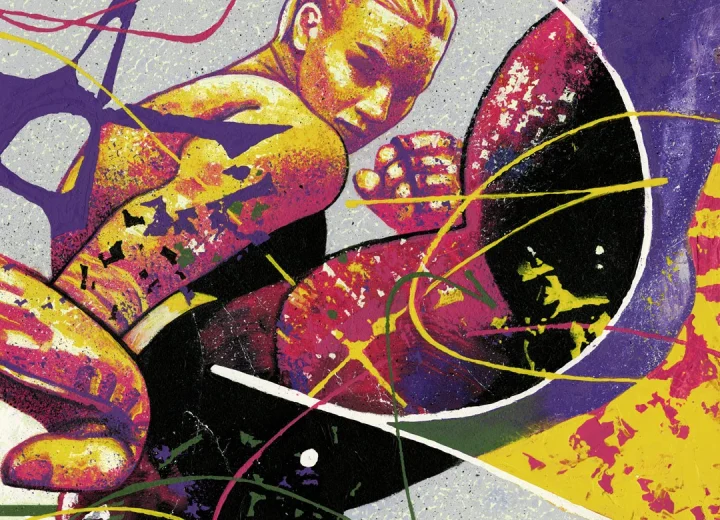
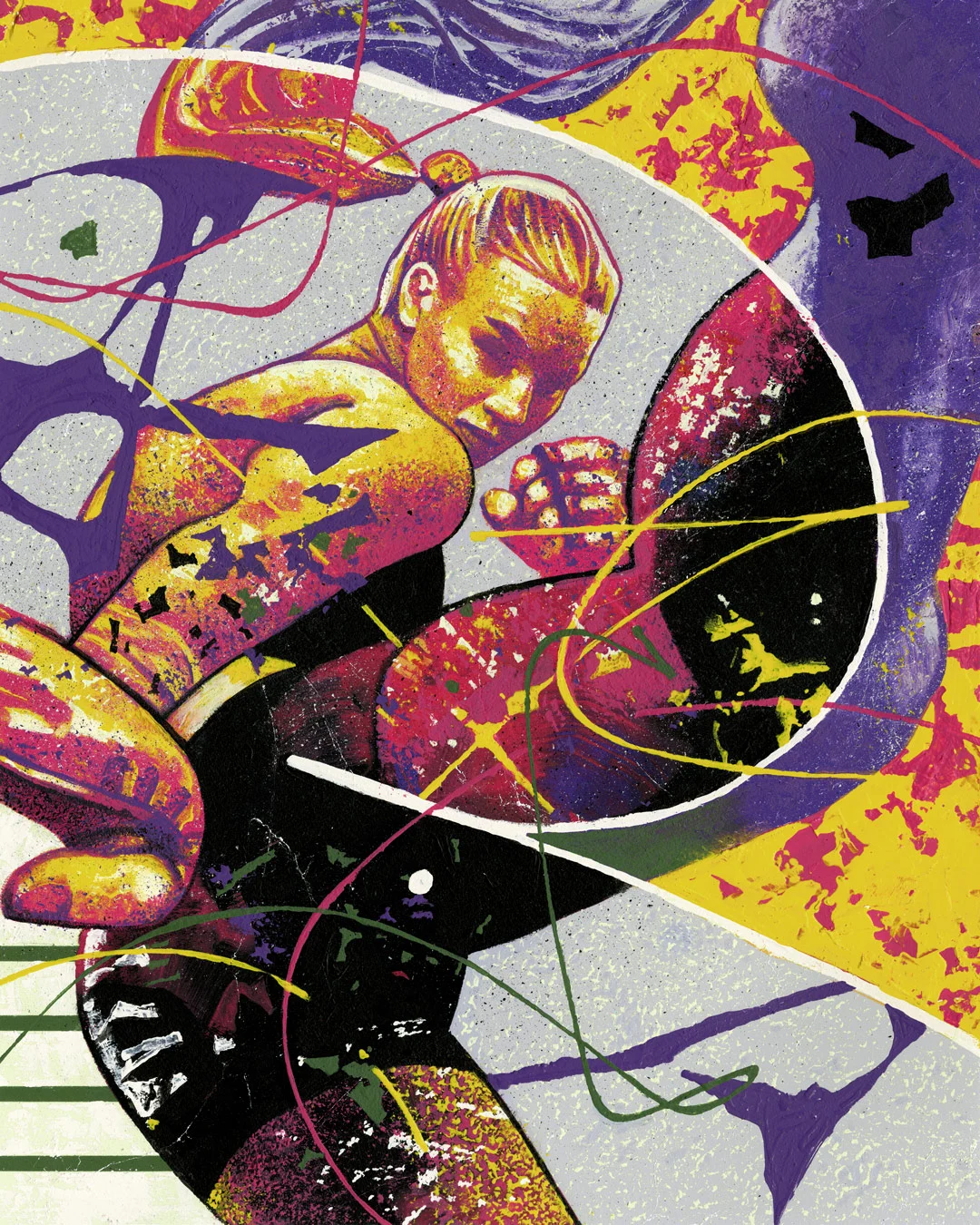
Galang’s Valentina Shevchenko portrait brings the kicking body into a field of bright colour and visible painted marks. The gesture remains readable while the surrounding forms pull attention beyond a straightforward likeness. Keep three records distinct when looking: the physical painted source, its digital presentation and the edition information.
The painting asks us to look at a surface: the relation of a body to its surroundings, the handling of colour, and the choice of what to make visible. The animated version adds a change over time. An edition record concerns the distribution of a digital object. None of those descriptions should silently stand in for the others.
Time enters a portrait
A colour shift can make a viewer notice that the image is still being encountered through a screen. Its subject may remain recognisable while the surrounding colour relationship changes. To inspect that effect, look first at the artist’s physical-work images, then at the digital presentation. Ask which decisions stay fixed and which become variable.
This is also a useful limit on sporting biography. A portrait is not a complete account of the athlete’s career. The painter selects a view and constructs an image. Our interest lies in that construction, rather than in adding a results summary around it. A fighter’s recognisable likeness and an image’s expressive organisation are related, but they are not identical.
An artwork record before a market story
Keep the creator, title or series, date, medium and dimensions together. Record the digital form separately. If considering a collectible, consult its actual terms for what is transferred; possession of one object does not by itself establish ownership of the original painting or reproduction rights. This feature makes no price, availability or investment claim.
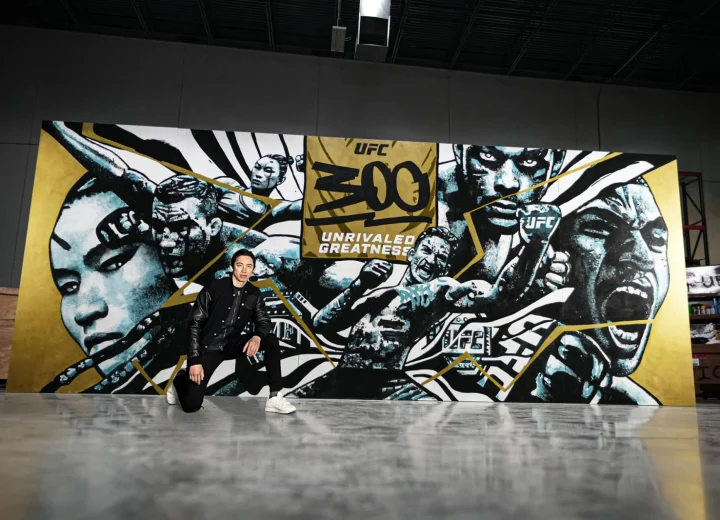
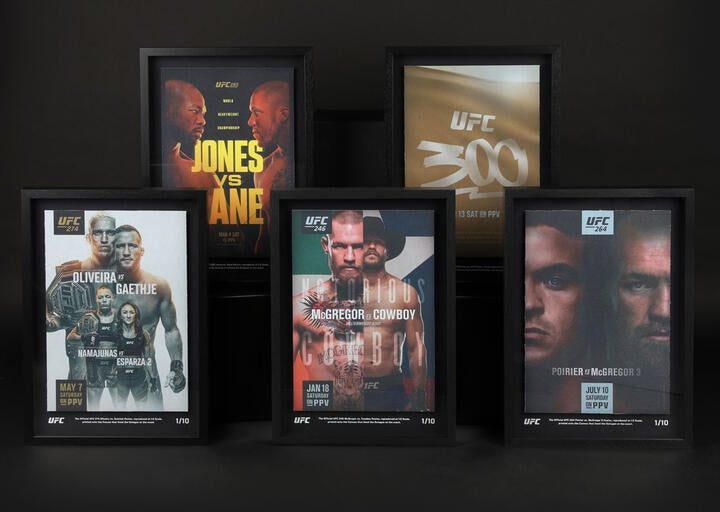
The UFC hub continues that attention to medium. Galang’s UFC 300 project moves painting between paper and a mural, while Poster on Canvas places an event image onto a surface used in competition. All three ask what an image gains—and what a reader needs to document—when it changes its material setting.
Sources & image credits
Primary records for the dates, makers and projects discussed above. Photographs and artwork images are credited in their captions, with links to the original publication or portfolio.
- Gian Galang — UFC/Crypto.com, original work record ↗
- UFC — Galang Artist Series announcement, 25 May 2022 ↗
Record checked 4 October 2026. Historical launch specifications are identified by date; product availability is not implied. The critical readings are BENI HASAN’s.