Real Madrid × Y-3: the rose on the uniform.
Yohji Yamamoto’s visual vocabulary enters matchwear. The 2024 collection is a reading of how a motif changes the reading of a kit.
A uniform is built to identify a group. A flower is usually read as an image of something else. Put them together and the garment acquires another line of attention: the viewer can recognise the team and inspect a motif that is not needed to tell one side from the other.
The 2024 collection
adidas announced the Y-3 and Real Madrid matchwear collection in March 2024. Its description identifies the rose as a signature motif returning to the early collaboration between adidas and Yohji Yamamoto. The collection included a purple fourth kit for the men’s and women’s teams, alongside goalkeeper and pre-match pieces. Real Madrid’s own announcement is dated 25 March 2024. We are examining that collection as a historical design record.
A motif has its own history
The rose does not need to be explained as a new emblem of the club. The maker’s account places it within the designer’s vocabulary. That attribution is valuable: it distinguishes a visual element brought by a collaborator from a symbol inherited from a sporting institution.
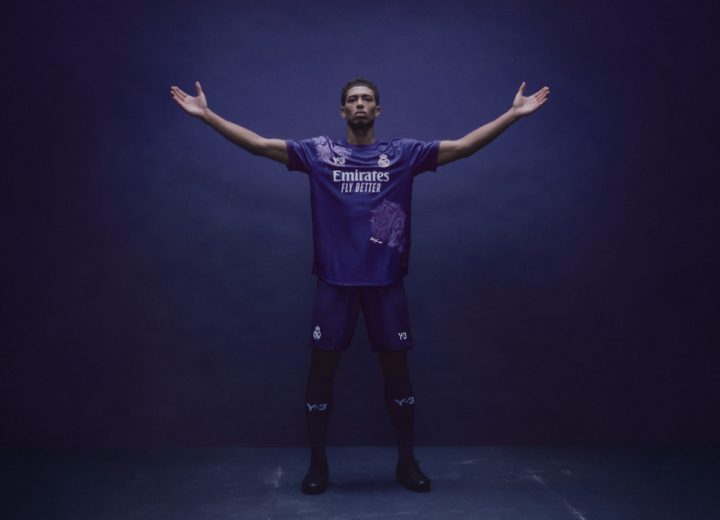
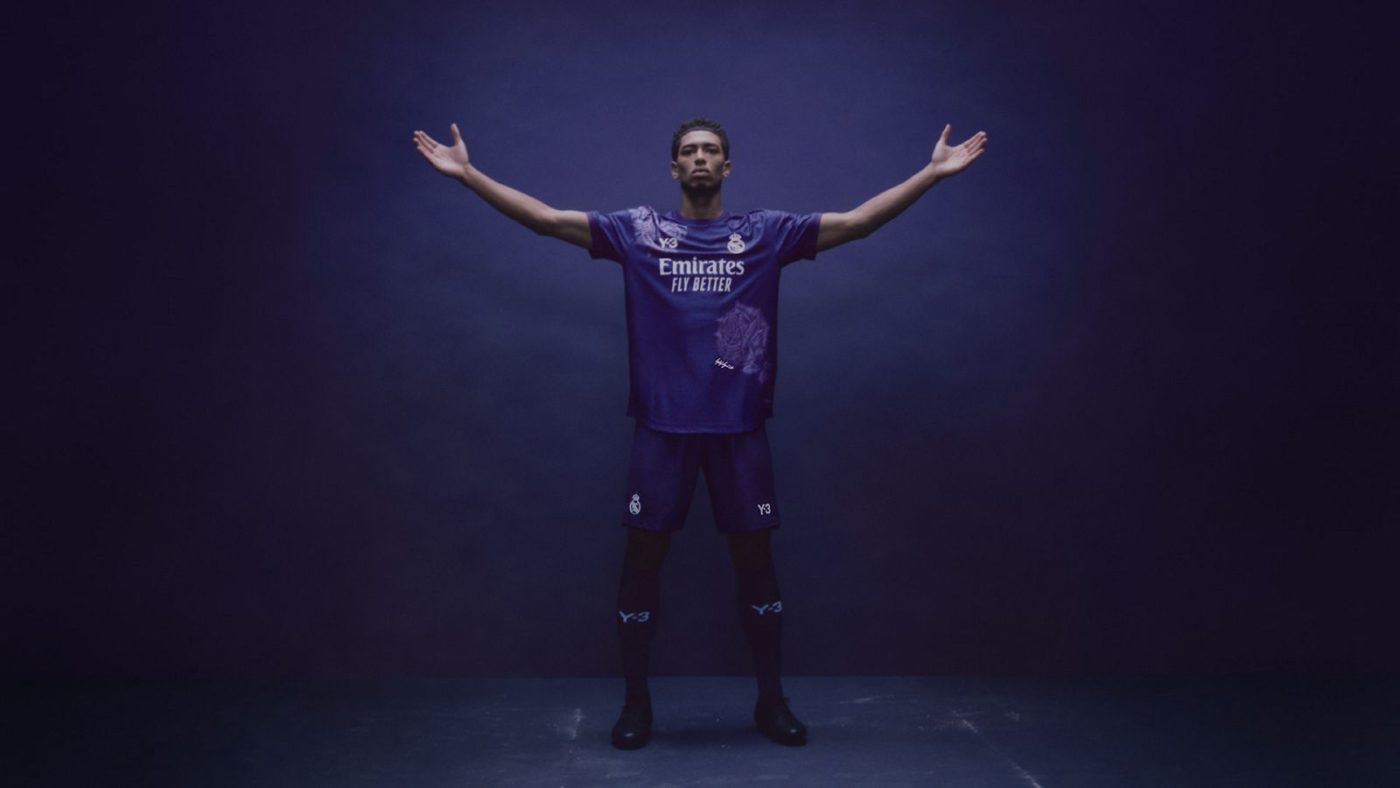
In the club’s campaign photograph, Jude Bellingham wears the purple kit with a rose visible below the main chest lettering. Its organic outline offers a softer second register beside the badge, Y-3 mark and sponsor. The image remains part of the shirt’s surface rather than becoming a separate illustration placed beside it.
The body is not a flat display
A graphic designed for clothing is encountered on a moving, folding surface. The same motif can read differently when a shirt is laid flat, worn or photographed tightly. A flower drawn across a garment may be interrupted by seams, posture or another mark. Those interruptions are part of how it functions as clothing.
This gives us a more exact way to discuss the meeting of fashion and football. Instead of treating collaboration as an automatic sign of creativity, ask whether the designer’s contribution changes the surface’s organisation. Does the motif lead the eye away from the badge? Does it compete with the numbering, or create a quieter second reading? Use the official collection images to answer for each garment.
An alternative to the new-drop story
The launch date matters for documentation, but it does not exhaust the subject. A collection can remain interesting after it is no longer new because it records a negotiation between visual identities. The club does not stop being recognisable; a designer’s vocabulary gives the viewer another path into its objects.
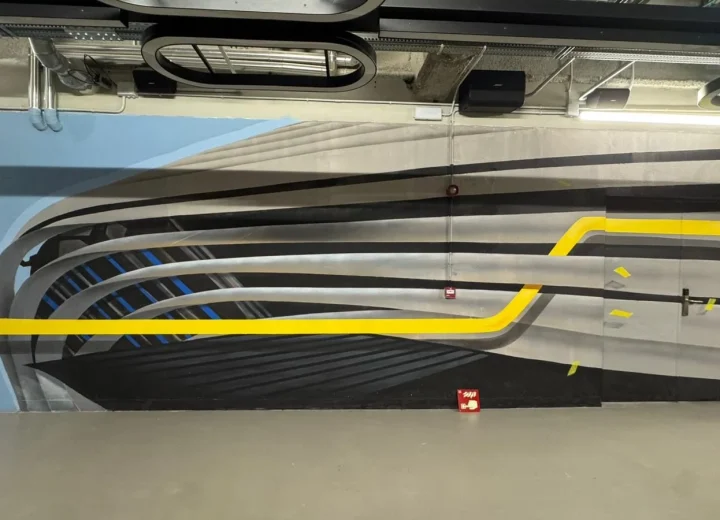
Beside the Bernabéu’s steel skin and its interior mural, the rose completes a comparison of surfaces. A building, a wall and a shirt carry identity through very different materials. That comparison is the purpose of this hub: to make Real Madrid’s cultural imagery available for sustained looking, beyond the rhythm of announcements.
Sources & image credits
Primary records for the dates, makers and projects discussed above. Photographs and artwork images are credited in their captions, with links to the original publication or portfolio.
- adidas — Y-3 and Real Madrid matchwear, March 2024 ↗
- Real Madrid — Collection announcement, 25 March 2024 ↗
Record checked 4 October 2026. Historical launch specifications are identified by date; product availability is not implied. The critical readings are BENI HASAN’s.