Spok Brillor: a stadium corridor becomes an art encounter.
A mural inside the Bernabéu changes the route through a football building. Looking at art, movement and the visitor’s attention.
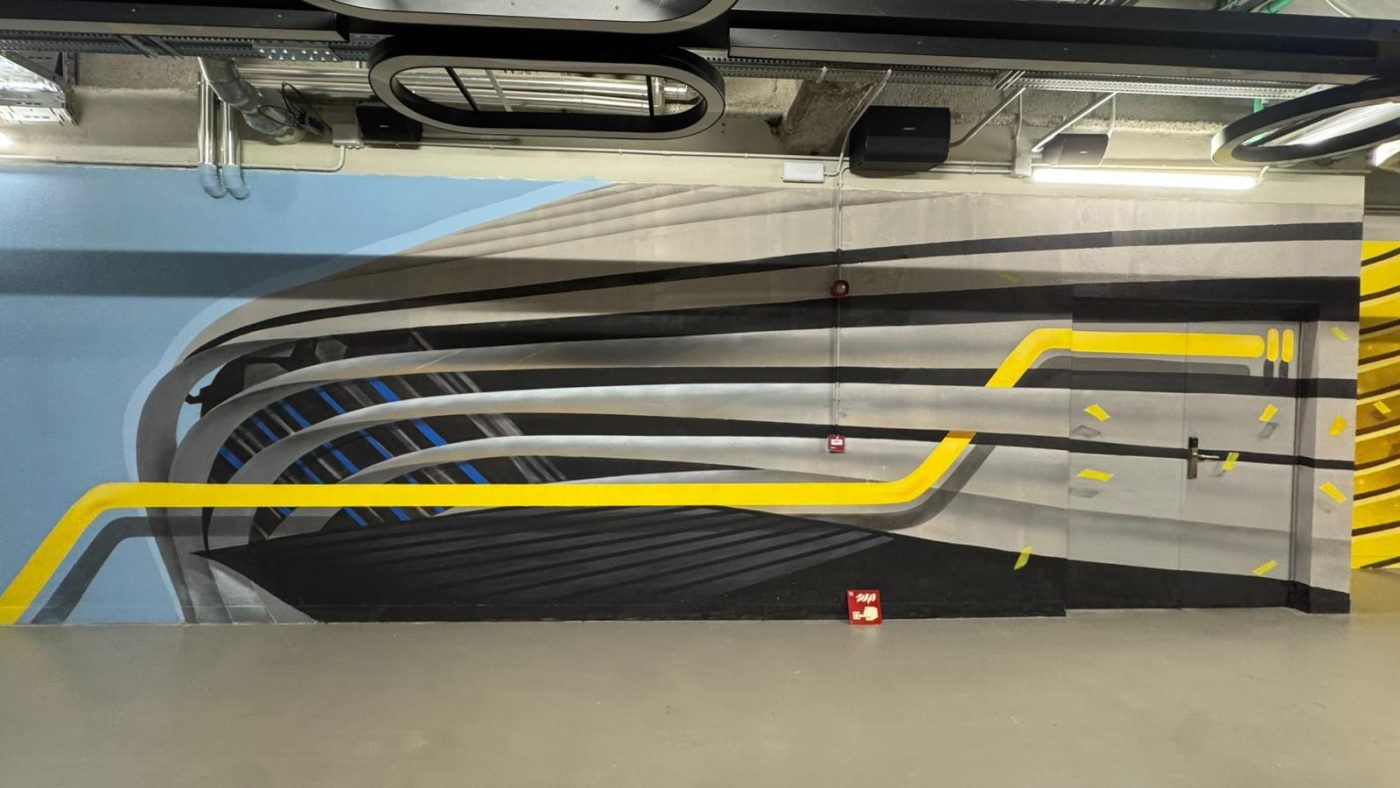
A stadium is usually pictured from its centre: the pitch, the stands, the crowd. Art inside a passageway asks for a different point of view. It belongs to the route between those familiar destinations. The viewer may encounter it while moving, rather than arriving with the intention of looking at an artwork.
The documented commission
The Bernabéu’s announcement of 5 March 2026 identifies the muralist as Félix Reboto, known as Spok Brillor. It places the work in the stadium’s interior galleries on level four, within the Realmadrid Games part of the tour. It credits the project’s conception to Antonio Yzaga. We retain those concrete details without repeating the announcement’s claims of a European first or ranking the work against other murals.
The corridor is part of the work’s context
The official installation photographs show long, sweeping grey and black forms cut by a bright yellow line. Doors, ceiling services and safety signs remain visible around and within the painted surface. The image meets the route rather than floating free of it: a visitor’s movement can determine which forms align and how much is seen at once.
A wall painting in a circulation space competes with signs, openings and the expectation of reaching somewhere else. That need not make the encounter weaker. It can make looking accidental, interrupting a visit that had another purpose. But an image selected for a photograph and an image experienced in a passage do not necessarily produce the same attention.
Publicness, inside
The term urban art does not tell us who can encounter a work. A mural on an exterior wall, a mural within a ticketed tour and a mural in a museum have different conditions of access. For this commission, the stadium-tour context is central. That distinction lets us discuss the work without treating its indoor location as a street setting.
The connection with Madrid is also more specific than a general claim that football and art belong together. An artist associated with the city contributes to the visual environment of one of its sporting buildings. That is a relationship between maker, institution and place. It does not establish what every visitor will feel, or turn an institutional commission into a portrait of the whole city.
A useful viewing sequence
Begin with the official installation photographs. Locate the image in relation to the passage, then examine its scale against doors and people. Ask which elements are visible from a distance and which require a pause. When visiting, compare that photographed view with the angle from which the work first enters your route.
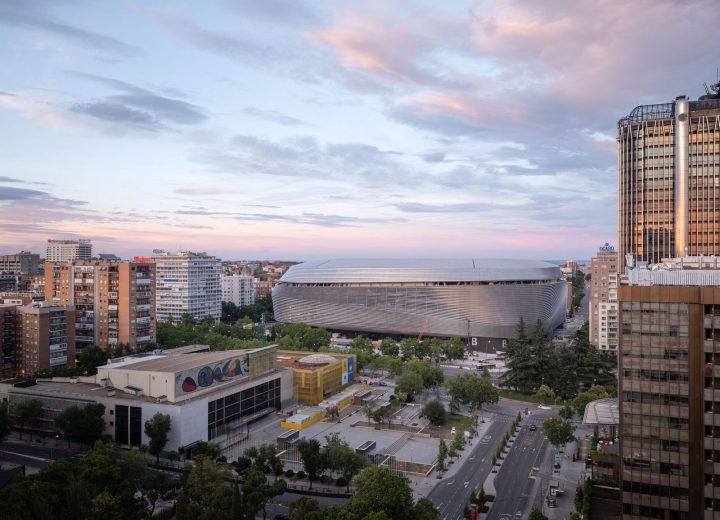
This feature sits beside our Bernabéu façade essay because the two address different distances. The exterior organises the building as a city image; the mural belongs to a closer encounter within it. Together they offer a cultural route through Real Madrid that starts with how a place is seen.
Sources & image credits
Primary records for the dates, makers and projects discussed above. Photographs and artwork images are credited in their captions, with links to the original publication or portfolio.
Record checked 4 October 2026. Historical launch specifications are identified by date; product availability is not implied. The critical readings are BENI HASAN’s.