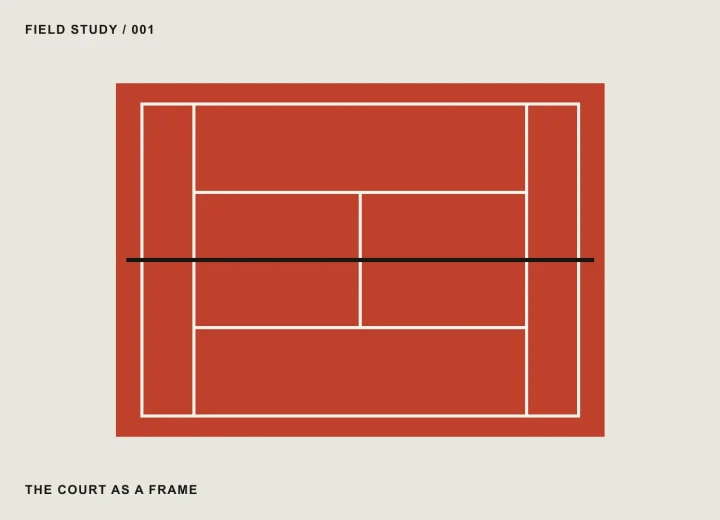
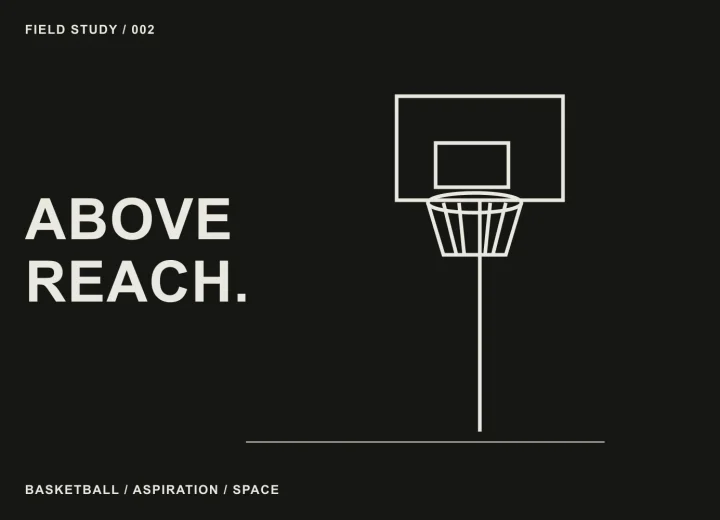
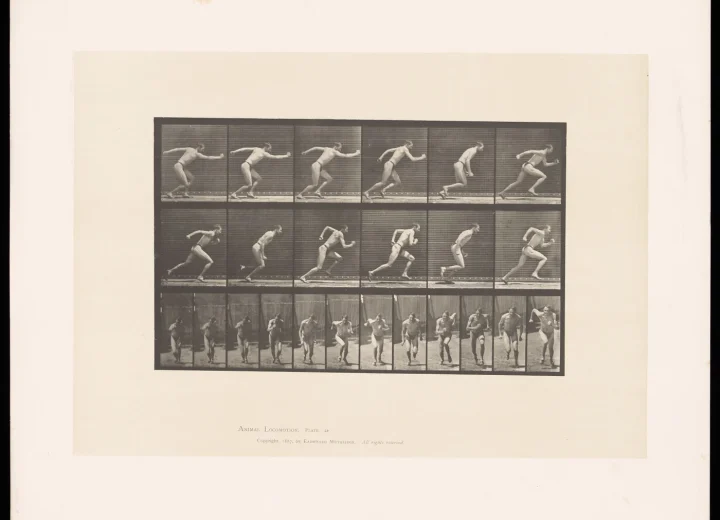
The body as an image.
Four thousand years before the replay, movement found a place on the wall. Our publication begins with the images behind its name.
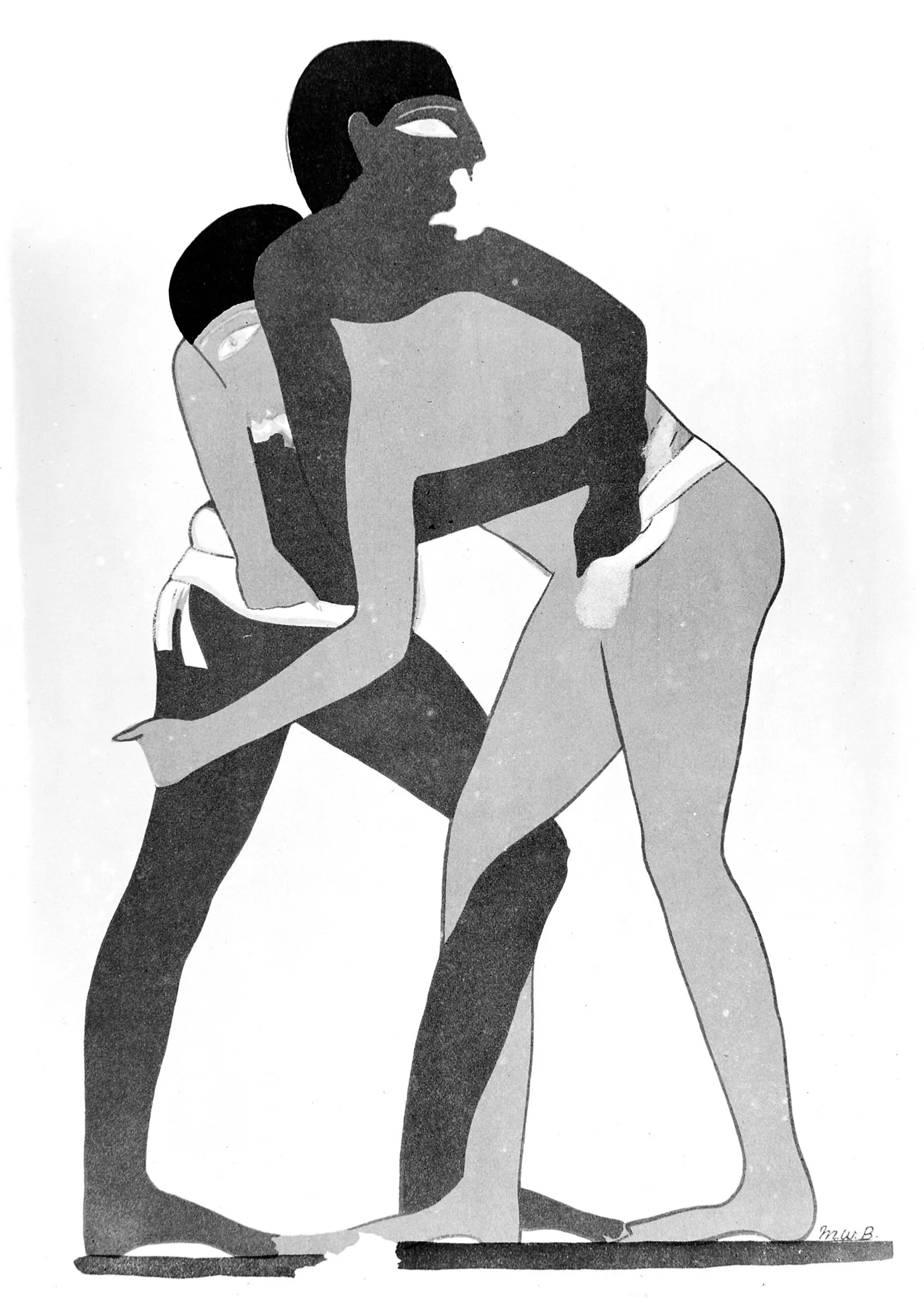
A body leans. Another resists. Weight shifts, limbs meet, and a moment of movement becomes an image. That encounter is the starting point for BENI HASAN.
Our name comes from an ancient Egyptian necropolis. In the tomb of Baqet III, the east wall preserves an extensive sequence of wrestling scenes. Egypt’s Ministry of Tourism and Antiquities describes 220 pairs of wrestlers, distinguished in red and dark brown so their interaction can be read.
Movement, made visible
This is one of the earliest surviving monumental visual records of athletic movement. It is not a claim to the first sports painting in history. Earlier images exist; the significance here is the scale and richness of an encounter between the body, competition and representation.
The detail reproduced here reaches us through another image: an archival photograph of a historical reproduction, held by the Wellcome Collection. Its journey from wall to publication is part of the story. Sport does not survive only through results. It survives through what people choose to picture and preserve.
Movement ends.
The image stays.
A point of departure
We take that relationship into the present: artists looking at courts, objects leaving the field, and places where spectators gather. A stadium and a museum each organise attention. Each asks us to look, remember and return.
BENI HASAN begins here, with a body in motion and an image that outlasts it.