UFC Poster on Canvas: the image meets the used surface.
An event poster printed onto event-used Octagon canvas joins representation with a material trace. An object reading of what each contributes.
A poster represents an event. A used sporting surface comes from one. Put them together and the object makes two different kinds of connection with the same occasion: one through a designed image, another through the material that occupied the arena.
The 2024 launch record
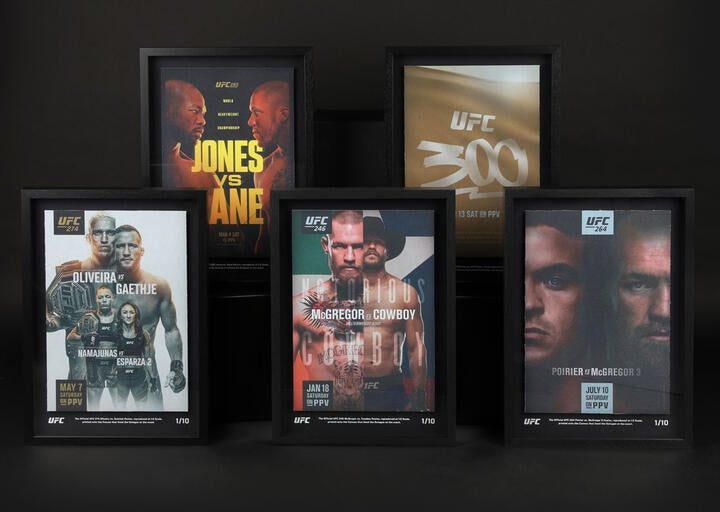
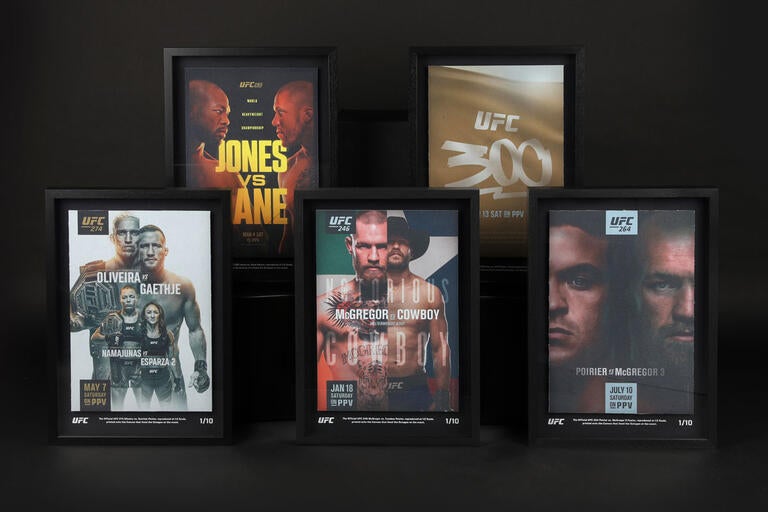
UFC’s 5 November 2024 announcement describes Poster on Canvas as event artwork printed directly onto event-used Octagon canvas by UFC Collectibles. The initial selection covered UFC 189, 246, 264, 274, 285 and 300. It states that each line was limited to ten, with the printed image at half the scale of the original poster. It also describes hand-cut canvas pieces with differing marks. These are the launch’s specifications, not a claim about present stock or the condition of an individual item.
Image and evidence do different jobs
The official launch photograph brings several framed event images into one collection view. Their common presentation makes the differences between designs easier to notice. Keep the printed picture, the cut sporting surface and its edition record separate: the appeal of an event image can be examined visually, while the claim to event-used material depends on documentation.
A marked surface may invite a viewer to imagine the competition that took place upon it. But a visible mark alone does not tell us whose movement caused it or when. The responsible reading keeps that uncertainty intact. The event-used designation and the chain of custody matter more than an attractive story inferred from a stain.
A surface becomes an object
Cutting and displaying a piece of material changes its function. Something that supported movement becomes something to be looked at. The printed image gives the fragment a recognisable subject, while the material carries a different relationship to the event. This is why the object deserves more than a caption calling it memorabilia.
It also asks how the image behaves on a support that was not originally made for printing. Texture, existing marks and the edges of the fragment can remain part of what is seen. For a particular example, compare the image with a conventional paper poster, then examine which details belong to the print and which to the surface beneath it.
A careful collection record
Document the event, named producer, edition information, dimensions, material, condition and the supplied authentication. Photograph the object and retain its paperwork together. Do not infer the artist of a particular poster solely from the event number: the artwork credit needs its own verification. Our record identifies the product line and producer, without inventing artist credits for all six designs.
For BENI HASAN, the important meeting is between an image and a material trace. Beside Galang’s painted portraits and mural, this object closes a small circuit: painting enters event media, and event material returns as a display surface. It offers a way to think about combat culture through what is made and kept, rather than through another list of results.
Sources & image credits
Primary records for the dates, makers and projects discussed above. Photographs and artwork images are credited in their captions, with links to the original publication or portfolio.
Record checked 4 October 2026. Historical launch specifications are identified by date; product availability is not implied. The critical readings are BENI HASAN’s.